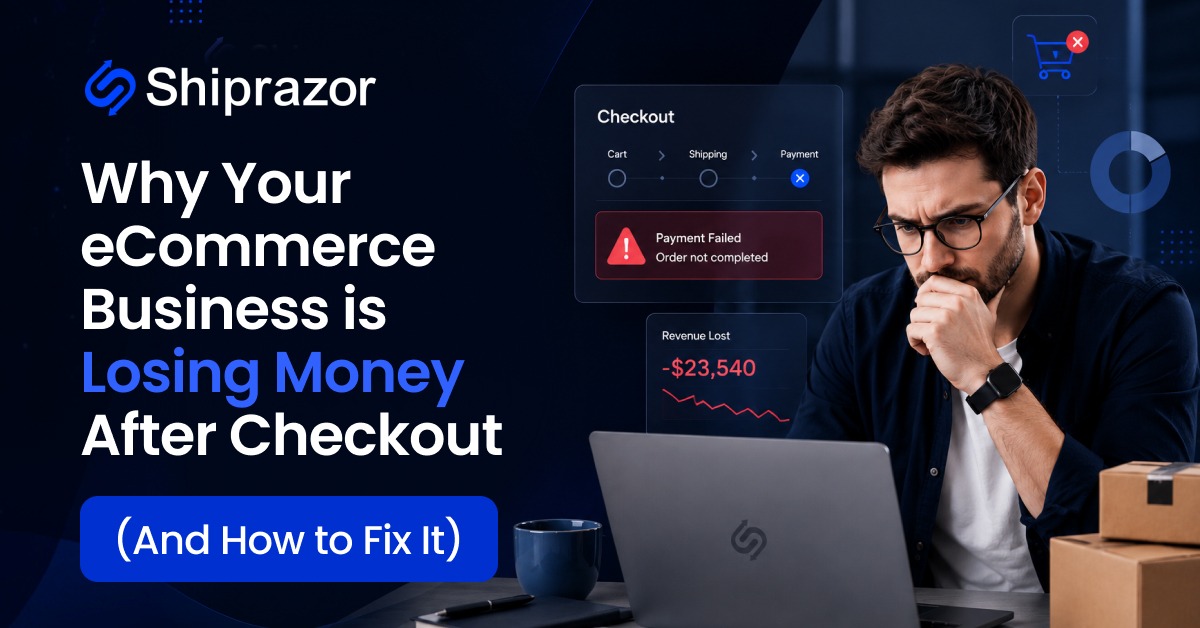
The common parameters for the success of any website include website traffic, customer acquisition, and conversion rates. The people working at the leadership level ignore what happens after the ‘buy now button. Their vision is often limited to creating successful sales. They fail to realise that when their fulfilment process is insufficient, they are unable to maintain a good profit margin, and it also leads to higher operational costs, failed deliveries, expensive returns, and inventory errors. As the retail environment becomes more and more competitive, customers are now expecting a seamless after-sales service.
The customer’s expectations now include a faster delivery, easy returns, accurate order tracking, and a consistent service across every sales channel. If businesses are not able to fulfill these expectations, they are more likely to lose customers and money.
The sales are no longer the deciding factor for achieving higher profit margins. If companies are experiencing a loss despite the increased sales, their post-sales service might be the hidden culprit.
Poor Fulfillment and Related Hidden Costs
The real cost of fulfilment is often mistaken by the retailers. They only take into account the shipping expenses. There are multiple hidden costs that are often created by inefficient logistics. They reduce the profitability in the long run. These costs mainly include:
- Waste of packaging
- Delayed dispatch time
- Multiple courier management
- Incorrect order picking
- Inefficiencies related to warehousing
- Manual order processing
- Lack of customer support
As companies scale their operations, these inefficiencies can prove to be very expensive. Companies often need to manually assign a courier partner for every order. If they choose the wrong courier partner, it would lead to a higher shipping charge for a particular time zone. Businesses do not pass on these costs to the customers and absorb them internally. As business operations become more and more advanced, they can automate the warehouse operations, the routing of the orders, and the courier selection. In this way, they are able to reduce the delivery costs and improve their everyday performance.
Reduced Number of Acquired Customers
It can become increasingly difficult to acquire a customer if the company has a poor delivery experience. Customer satisfaction gets affected by missing packages, failed delivery attempts, and delayed deliveries. The modern consumers are now expecting fast shipping, reliable delivery tracking, and a superior delivery experience. If they are not able to get these, they quickly move on to the next company.
Failed deliveries also lead to additional expenses such as lost customers, re-shipping expenses, refund processing, customer service interactions, and compensation offers. If companies are able to create an integrated fulfilment platform, they will be able to reduce the delivery failures.
Reduced Revenue Due to Inaccuracies in Inventory
Companies list products that are often out of stock, which leads to refund requests, order cancellations, and frustrated customers. Companies need to have a centralised inventory management system that allows them to sell across multiple channels.
If companies can synchronize their inventory with the help of integrated omnichannel fulfilment systems, they will be able to monitor their sales in real time and ensure an accurate visibility of stock. This can reduce the losses and reduce cash flow in the long run.
With better inventory management, companies can improve their forecasting, lower their operational costs, reduce their cancelled orders, and enhance the satisfaction of consumers.
The Real Profit Killer: Return and Reverse Logistics
The online retail business has always remained prone to returns. The financial impact of every return is increased because of poor reverse logistics. If companies are not able to have a structured return process, they remain prone to loss of inventory, delays in product restocking, high costs related to manual processing, and slow refund cycles. If a returned order remains unprocessed, it can lead to a loss of revenue. This would lead to a repeated cycle of fulfillment issues that remain unresolved.
On the other hand, if a company has an efficient logistics system, it can make it easier for customers to raise their return requests, get a faster product inspection, and get a faster refund. It also means a quicker inventory reintegration and an automated refund workflow. In this way, businesses can reduce their operational costs and recover their inventory in a faster manner. The confidence of the consumers gets strengthened, and the companies can recover their inventory more efficiently.
Advantages of Having An Omnichannel Fulfillment
It will become difficult for businesses to operate through separate fulfillment channels to manage their inventory. By adopting omnichannel fulfillment, they will be able to connect every sale through a centralised logistics ecosystem. The benefits of having this system include:
- Faster dispatch
- Valuable customer experiences
- Single dashboard for inventory management
- Reduced operational costs
- Automated order routing
- Better reporting
Customers can enjoy a comfortable purchasing experience, no matter where they make their purchase. Even the businesses are able to get full control by getting complete visibility over their order performance and inventory. These systems can improve the scalability of the business and avoid unnecessary complexities.
Benefits of Having Integrated Logistics
Logistics should be treated as a strategic growth function rather than a means of providing a delivery to a customer. By having an integrated logistics partner in South Africa, companies will be able to avail the full benefits of courier management and warehousing. It offers other benefits such as:
Single Dashboard for Order Management
As the orders from the sales are visible at a single platform, companies can reduce the manual work, and they are also able to reduce errors related to processing.
Improved Visibility
By having a real-time visibility of the orders, companies can improve their replenishment planning and prevent overselling.
Optimisation of The Warehouse
Companies can experience increased productivity and reduced labour costs with the help of efficient dispatch processes, picking, and packing.
Courier Allocation
Companies can assign the most cost-effective courier based on the pricing, speed, and delivery performance.
The Road Ahead
Many businesses have attributed the rising competition and the advertising costs as the primary factors for the lost revenue. They fail to realise that their revenue is often lost after the actual delivery happens. The profit margins are reduced due to factors such as failed deliveries, inaccuracies in inventory, fragmented logistics systems, and inefficient fulfillment. These factors can lead to reduced profits daily.
These problems cannot be solved by finding a cheaper courier alternative. It can only be resolved by creating an integrated fulfilment strategy that can simplify every step that follows the post-purchase journey of a customer. As customers continue to increase their expectations with the rising global trends, companies will be expected to integrate the omnichannel fulfillment networks, which will increase their long-term growth and increase their profitability.
FAQs (Frequently Asked Questions)
eCommerce fulfillment covers the entire process of storing, packing, shipping, and delivering online orders to customers.
Businesses can reduce shipping costs by automating courier selection, optimizing packaging, and partnering with an experienced logistics provider.
Omnichannel fulfillment synchronizes inventory and orders across all sales channels, improving efficiency and customer experience.
Failed or delayed deliveries increase operational costs, reduce customer satisfaction, and negatively impact repeat purchases.
A reliable logistics partner in South Africa helps streamline fulfillment, improve delivery performance, lower costs, and support business growth.