
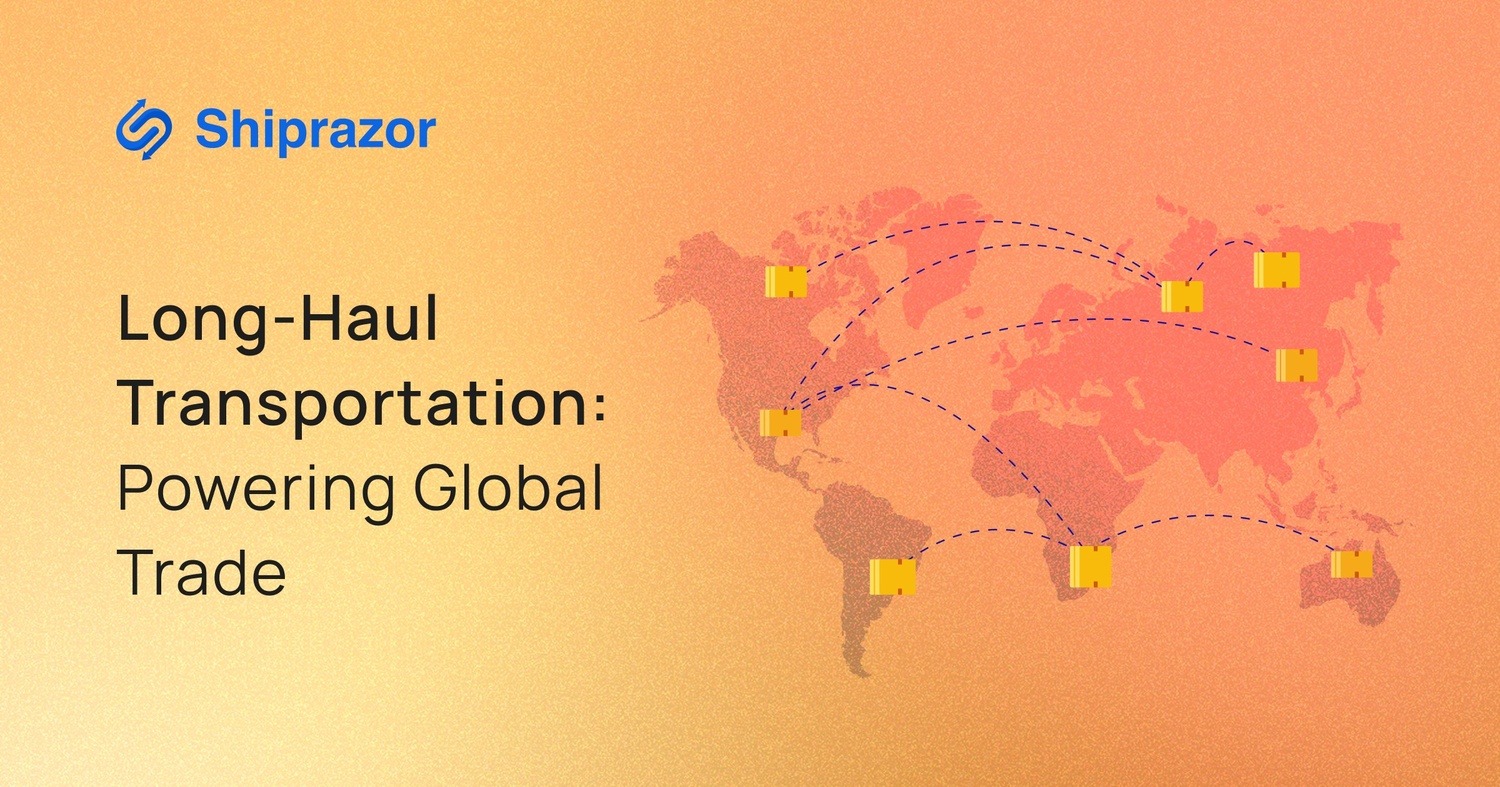
To ensure a seamless movement of goods and services between countries in the global economy, companies need to build a seamless network. It has become essential rather than a beneficial aspect of international eCommerce. Long-haul transportation has allowed the movement of products between continents, and it has allowed businesses to scale beyond the domestic network. The consumers have been linked to the manufacturers on an unprecedented scale. It is now possible to get coffee from Brazil by sitting comfortably at your home in East Asia. This statement is now applicable to a wide variety of products on the global level.
Long Haul Transportation: Explained
It refers to the movement of goods and services over long distances. It differs from short-haul transportation in terms of distance, complexities related to logistics, and time duration. Long-haul transportation is facilitated by these primary channels:
Railways: It can prove effective for major economic corridors, and it’s relatively more cost-effective and efficient.
Airways: It is preferred for more sensitive and high-value products. It can prove to be a relatively more expensive and faster channel.
Maritime Shipping: When it comes to the global freight network, this is the most widely used channel of transportation. It is used to carry bulk articles across continents.
Roadways: It is usually preferred for regional delivery, and trucks continue to transport goods mainly between cross-border and different cities.
These channels are together known as intermodal transport, where the goods move between different modes. This ensures an efficient and end-to-end delivery.
The Importance of Long-Haul Transportation In Global Trade
The products from the areas of manufacturing should be able to reach the areas of demand. Global trade has made this process visibly seamless. There are possible in the ways for the following:
Enhancing The Resilience of Supply Chains
Long-haul transportation has been successful in finding alternate routes and incorporating the redundancies. This has enabled the mitigation of several disruptions. These disruptions might arise due to multiple factors such as weather conditions, state tensions and problems related to infrastructure. Long-haul transportation has been able to build a stronger supply chain by ensuring a seamless movement of goods and services.
A Global Network of Markets
The geographical gaps are bridged with the help of long-haul transportation. Each country specializes in a specific set of products- raw materials, finished products, etc. With stronger transportation networks, they can reach consumers across the world with utmost ease. If trade is limited to the domestic market, the production costs would rise, and the markets would eventually shrink.
Supporting Employment Opportunities
Long-haul transportation has been able to contribute to the economic growth of a country by providing an ample number of job opportunities. It has successfully employed truck drivers and logistics partners, which have allowed a seamless movement of goods and services between economies. The growth of certain countries like China, Saudi Arabia, and Germany has been heavily dependent on global trade.
Lowering of Overall Costs
Long-haul transportation can dramatically reduce the per-unit cost of freight and provide economies of scale. When each vessel carries thousands of consumer goods, it can lead to innovations like better fuel efficiency, larger vessels, and digital tracking.
Is Long-Haul Transportation Prone To Potential Challenges?
Long-haul transportation comes with its own set of challenges. The inflow of continuous investment related to infrastructure, road networks, ports and railways, has remained a persistent challenge. This infrastructure also requires maintenance in the long run which comes with additional costs. Certain obstacles are created due to outdated facilities and congestion. These facilities also remain prone to natural disasters and pandemics. This can disrupt the existing routes and force complex rerouting.
The movement of goods and services is also subject to trade restrictions, tariffs, border controls, and added costs. Apart from this, global trade can also have certain environmental implications. The production of greenhouse gases has led to the need to create more sustainable forms of technology.
Long-Haul Transportation in South Africa
Long-haul transportation has enabled global trade and regional connectivity in South Africa. With the expanding economy, South Africa continues to face complexities related to regulation and certain infrastructure gaps. Even after encountering these potential challenges, South Africa has been able to establish itself and a major player the the global market. It has been able to transport a wide variety of goods, including automobile components, coal and minerals, to containerized goods. These goods are exported to major hubs like Europe, Asia, and America.
This intermodal network is not limited to the sea. The major ports are connected to the economic centers inland and neighboring countries with the help of robust road and rail systems. This has facilitated intra-African trade as well as the export of goods and services to the global market.
The Role of Long-Haul Transportation In The Coming Future
To respond to the demand, technology and the sustainability goals, long-haul transportation will continue to expand and adapt to the ongoing trends. It will primarily include:
Integration of Regional Trade: The African Continental Free Trade Area (AfCFTA) is aimed at increasing intra-regional commerce and reducing the barriers related to trade.
Infrastructure Expansion: New avenues for trade will be opened with the investments in the multimodal transport corridors. It will help the developed economies as well as the emerging regions in South Africa and Southeast Asia.
Automation and Digitalization: With the integration of technologies like blockchain tracking, AI-driven logistics planning, and automated vehicles, we would be able to increase the reliability of long-haul transportation.
Transition Towards Greener Practices: To reduce the environmental impact of trade practices, there will be a shift towards low-emission fuels, electrification of fleets, and greater input in designing the vessels.
Final Thoughts
Long-haul transportation has gradually become the cornerstone of trade in the global economy. Goods are services that have been able to reach the areas of demand from the areas of manufacturing. It has been able to foster both international cooperation and economic growth by creating an ample number of job opportunities. It still needs coordinated global responses in terms of infrastructural gaps and environmental pressures.
By strengthening the regional economies, countries like South Africa have been able to connect the continent with the global economy. This has been possible by the efficient use of long-haul transportation. With the evolution of technology and the changing trade patterns, we will witness the growing need for a more resilient and effective network of long-haul transportation. It would gradually reshape the future of global commerce.