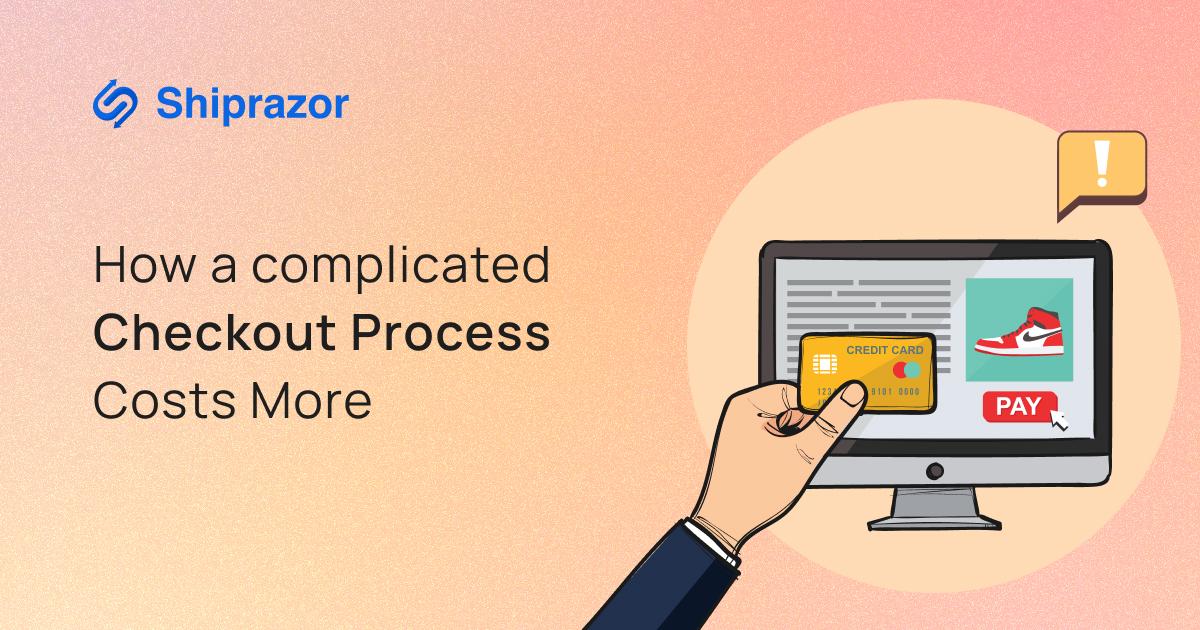
We live in a tech-savvy world which is obsessed with bringing in the new trends and strategies to boost sales and generate profit. One of the major factors for a bleeding revenue is often overlooked. It is that of a complicated checkout process. While all the industry leaders have realized the importance of cart drop-offs, they are yet to realize how a complicated checkout process can force your customers to stop their conversions at the last minute.
Why Should Companies Avoid A Complicated Checkout Process?
Every consumer nowadays wants their checkout process to be as simple as possible. They do not abandon their carts because they suddenly changed their mind. They abandon their carts because it takes them too long to complete their purchase. The reasons behind a complicated checkout process might include too many redirects, a lack of payment options at the checkout page, slow loading of the steps or forced account creation on the website.
This happens when the purchase intent of the customer is at its highest, and they are at the final step of placing their order. This is almost like a speed bump at the end of a race, where the customer is just about to generate an invoice or revenue for the business, and they are forced to retract their order. A complicated checkout process also affects the reputation of a brand. They think of the brand as lacking a customer-centric mentality and being incompetent. They are unable to build trust with the brand, and they do not make future purchases. A brand which is able to deliver the rightful customer experience can generate more sales and retain its customers in the long run.
The Psychology of Customers Behind Cart Drop-Offs
When the customer is at the final checkout step, their mindset if that of execution rather than exploration. They have made up their mind about making that purchase. Therefore, they face a lot of cognitive load at this stage. Cognitive load implies that the human brain has a very limited capacity to process a lot of information at one go. Their brain might feel overloaded with complicated instructions, multiple dropdowns or unclear steps. The user might feel very stressed and overwhelmed regarding their purchase, and they might choose to abandon their carts.
The users also might want to avoid unexpected steps or costs at the last minute. These might include shipping charges, security verification steps or additional taxes. All of these factors together add to the uncertainty of the users. Biologically, humans are designed to avoid possible risks, and therefore, it makes them more likely to choose simple processes over complicated ones. Their processes should not work against the predictable consumer patterns and continuously work towards the fulfilment of their expectations.
Common Barriers During The Checkout Process
A customer might feel frustrated over multiple reasons before finalising their purchase. Some websites require them to create an account. When they are at the final step of their order process, they do not wish to fill in extra details or want unwanted updates regarding the website. When they are required to fill unwanted fields such as middle name, bank details and additional phone numbers, it might feel intrusive and unnecessary to the customers, and they might start looking for alternate websites that offer the same products. They might also leave when they fail to find the right payment options. The customers today are well informed about UPI, digital wallets and one-click payment options, and they wish for them to be seamlessly integrated across all channels.
The customers also want to avoid surprises while making their purchases; they do not want any hidden costs or additional charges to be revealed later. Transparency is one of the most essential aspects for any customer while making their purchase. The customers might also expect an efficient customer support team, SSL certificate and security badges to add to the credibility of ther purchase. They also expect companies to use the latest forms of technology, such as the auto-filling of details, optimisation for small screens and adequate return policies. Any failure to provide any of these services might result in cart abandonments.
How Can Companies Simplify The Checkout Process and Boost Conversions?
Simplifying a checkout process does not require the use of complicated marketing strategies. A company can achieve this with the help of the following strategies or steps:
Improved Customer Confidence
If the customers can get a sense of control and absolute transparency in their checkout, they will be more likely to place their order.
Better User Experience
The current generation is very tech-savvy, and they want everything at rocket speed. The customers need websites that offer a high browsing speed and cater to their impulse buying propensities.
Personalization
The brands which offer better incentives, smart recommendations and membership incentives can gain and retain more customers than the ones who don’t. It can only happen when the checkout process isn’t flooded with clutter.
Reduced Mental Effort
The customers are on the lookout for websites which can offer facilities such as auto-fill of their details and one-click options with simplified operations in ecommerce. It enables them to save both time and effort and make their purchases instantaneously.
When a brand wants to simplify its checkout process, it only needs to remove the right obstacles. It does not require them to invest an extravagant amount in the latest technology, just the right functioning of the existing one.
Case Studies From Global Leaders
Brands which have been able to optimise their checkout strategy have been able to stand out as global leaders in the e-commerce market. Amazon has successfully launched its one-click checkout, which has revolutionised the way conversions work. Shopify has made full use of its Shop Pay feature. Due to the auto-filling credentials and fast authentication features, they have been able to gain higher conversions. Another successful example is Apple, which has made use of biometric authentication. It has been considered as one of the easiest and fastest ways of getting purchase authorisation.
Conclusion: An Easy Checkout Is The Only Way to Thrive In The E-commerce Market
An uncomplicated checkout process might not seem valuable to the companies at first glance. But it can become one of the major reasons for revenue leaks and abandoned carts in the long run. The brand needs to realize that the actual conversion happens at the end and not the beginning of any purchase. They must ensure that the customers do not change their minds at the last minute. Brands need to convert the intent of the customers into action.
Customers nowadays function on instant gratification and a user-friendly buying experience. With the aid of the latest technology, they are not only able to improve their UX wireframe, but they are also able to gain a competitive advantage and boost their sales in the long run.